The End Of The NHL's Pet Rivalry

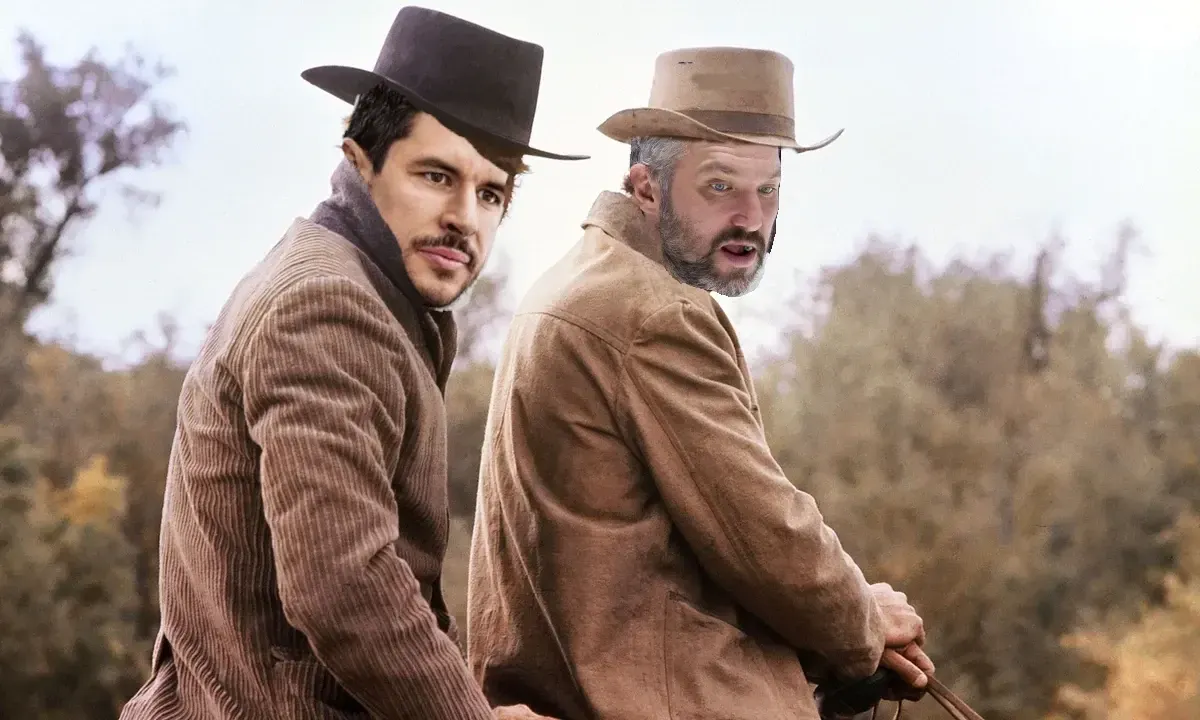
Crosby-Ovechkin comes to an end this season. Did the NHL get what it wanted out of it?
There will be three more this season, but last night saw the first installment of the Crosby-Ovechkin Farewell Tour. You can be sure the next three set-tos will be inundated with NHL-backed publicity and prose. After all, the league forced this on us for two decades, why stop now? But did it really work the way they wanted?
The Ovechkin-Crosby rivalry was born out of the league's own greed and incompetence. They only came into the league together because the NHL canceled the '04-'05 season that would have been Ovechkin's rookie season, and hence he had to wait until Crosby was the most recent #1 pick (the year Ovechkin and Malkin were taken was still when hockey was an afterthought in my life, but I remember calling my brother and saying how perfect it was that the Hawks ended up with the #3 pick in what everyone agreed was a two-player draft. We still love you, Cam Barker).
Gary Bettman and the league were not so jaded or stupid that they couldn't recognize an opportunity, even if it rose out of their own avarice. The NHL, lacking any original idea on how to market itself or make it inviting to non-fans around the country, had been dying to ape the NBA with its star-driven image and branding, and especially a Bird-Magic dichotomy that they could milk for all it was worth.
There were similar juxtapositions between Crosby and Ovechkin that there were between Bird and Magic. Ovechkin was seen as the free spirit, as Magic was, the improvisational game that would flash on highlights. Bird and Crosby were the metronomic fundamentals done to the hilt. They even had an amateur meet-up, though anyone in the NHL offices convincing themselves that the 2005 WJC Final was even in the same solar system as the 1979 NCAA Final would have been huffing some serious fumes.
Of course, the differences were clear. Bird and Magic lined up for the NBA's most storied team on each coast, trapping the entire nation in the middle (it also didn't hurt that a third, brighter star, usurped them both from the middle). While the Penguins had some cache from their Lemieux years, they were hardly on the level of the Celtics or Lakers, or even Red Wings or Canadiens in hockey. The Caps, on the other hand, were basically the team that Jaromir Jagr spent some years urinating on from the inside, or the colors Dale Hunter was wearing when he assaulted Pierre Turgeon, and that's about it. They were a seat-filler. Trapped within 250 miles of each other, it always had the feel of a local skirmish more than a league-wide battle.
Whereas Bird and Magic immediately electro-shocked their teams into championship contention, only Crosby did for his side. While it was never a question that Crosby would be the bedrock of contending teams, both in the NHL and on the international stage as he racked up Final appearances and gold medals within five years, it didn't take long for many to wonder if a team built around a goal-searching winger could compete in the same way. Ovechkin didn't even see a conference final for 13 years, and his cracks at the Olympics saw him get trucked by Rick Nash or stonewalled by Tuukka Rask on home soil. At least partially due to his "not from round here" status, Ovechkin pretty quickly saw skepticism that he was truly a foundational player.
Yet the NHL kept telling its fans that this was the preeminent relationship in the league. But the league was always actively working against making it so. Bird and Magic spearheaded dynasty teams. The NHL's hard salary cap's main goal was to prevent teams from staying on top for any stretch of time (though the Hawks, Kings, Penguins, and Panthers have still found a way). The NBA didn't stand in the way of the Lakers and Celtics collecting a combined eight rings and even more Finals appearances. The NHL wanted to pass the Cup around like a joint (ask your parents, kids. It's like a vape you made yourself).
It did get one playoff series pretty quickly, and it got its desired seven games with dueling hat tricks along the way. But after the Caps spit it in the decider in 2009, it didn't feel like the Pens and Caps resided in the same neighborhood for years. The Pens were usually around it, or at least thought of as being around it, while the Caps just made up the numbers in the playoffs before losing to the Rangers every goddamn year. The truth was that neither were ever all that close between 2010-2016, save one conference final appearance by the Pens, where they got utterly clocked by the Bruins.
But the league would not be deterred, and reengineered the playoff system to get Crosby and Ovechkin on the dance floor together more often. Oh sure, they told us it was about travel or fairness or harkening back to old divisional rivalries, but the changing of the playoff system to this divisional set-up, a system pretty much everyone but Gary Bettman doesn't like, was all about getting Crosby and Ovechkin in a series more often.
It worked, as three straight years they played. Some of those games were the highest rated non-Final playoff games in NHL history, so perhaps the league was right. Funny enough, the Caps one win over the Penguins in 2018 was partially a result of the Penguins' exhaustion from beating them the previous two years and winning the Cup. But hey, they don't ask how, right?
So we can't say that the rivalry didn't make a difference. And yet it's hardly been embraced in the same way as the NBA's. Because hockey doesn't work that way, and also probably more sordid reasons, given how hockey fans can feel about basketball. Crosby and Ovechkin don't actually share the ice all that much, don't play the same position, etc. Even if they were to take every shift against each other, that would only be just about a third of any game. They don't even take faceoffs against each other, giving the opportunity for some famous photograph. If the NHL was into engineering, or competent at it, it would have thrown the Kings and Penguins at each other in '92 or '93.
Given the way the league hungrily tried to make this the crux of the entire league, most fans have always had a distaste for the whole thing, even if they still tuned in. Hockey fans are pretty resistant to being told what matters and what they should like.
And yet, by the time the trilogy came around in 2016, because there had been so many years without and both had been so set on their paths, it felt like there was a begrudging acceptance of it. Because the league had to wait so long for what it wanted so badly, most fans patted Bettman's head and said, "Oh, I think you've learned your lesson, go and jump in the ball pit."
They'll exit this relationship with more than enough baubles. Ovechkin is the greatest goal-scorer of all-time, breaking what was thought of as unbreakable. Crosby will nestle comfortably into the very top echelon of the Hall of Fame with his multiple rings, gold medals, and Harts. On paper, it was probably everything the league dreamed of. Was it in spirit?
Perhaps we hockey fans spent too much time looking a gift horse in the mouth. Or we were right that hockey is just different. Both? Something is passing at the end of this season. It's hard to know what.