Was Pochettino Worth It?

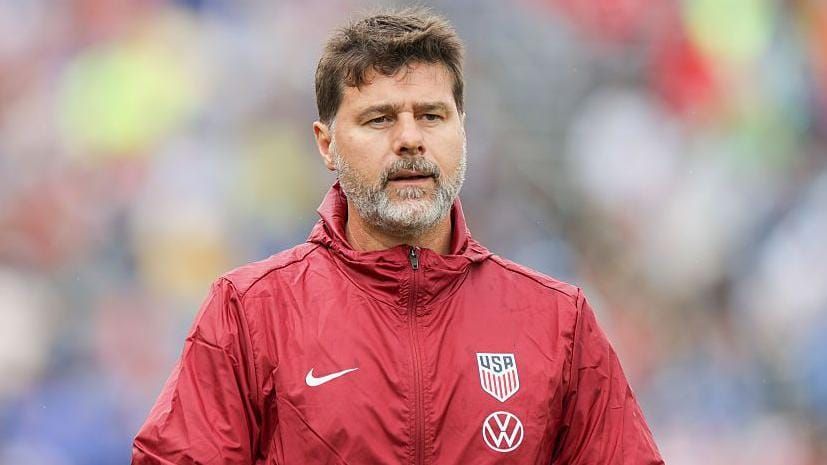
Now that he's taking his predictable exit, what did it all mean?
This is always how it was going to end. It's what happens when you shop at the Harrod's of managers, where you'll find Mauricio Pochettino on the shelf (there's an image). Eventually, after being courted by some of the biggest clubs in the world, they're going to say yes. We've all dated up a level at some point in our lives, and know the bell eventually tolls to send us back to our strata (though some of us are lucky enough to keep them fooled for a long time!).
The allure of club management for someone like Pochettino is obvious, as it's every day and they get to really stamp their personality over not just the team, but the whole organization. Or they would, except that Manchester United have already been stamped as a confederacy of fuckwits, and I would wager that it won't take more than 12-18 months for Poch to realize his blood pressure and mental well-being will take a major upturn if he blasts noogies right out of there. At the current moment, ambition still rules, however.
BUT THAT'S NOT WHAT YOU CALLED.
With Poch's switch to Manchester now on deck, there has been a lot of discussion of whether the big swing of hiring Pochettino was worth it. It wasn't really US Soccer's money, as they basically asked Ken Griffin for an allowance to pay him. But that's probably not a tap they can always turn on, and have to be careful about when and how often they ask. But the question gets to more whether someone else could have done the same thing.
I think that's a pretty surface-level and rote discussion. I can't ignore the facts. The US didn't get to the World Cup quarterfinals, and seeing as how they were playing at home, they probably won't ever get a better chance to do so. On paper, and on the record that lasts forever, they didn't accomplish anything they hadn't already. Poch is no better than Berhalter, or Bradley, or Klinsmann. Bruce Arena stands alone, which I'm sure is something he never hesitates to point out.
But World Cups are weird, given that they're every four years, they're with teams that can't really be built so much as just assembled with whatever's on hand, the conditions always change, and the stakes, of course. Arena benefitted from a tournament that started a week earlier than usual, catching a lot of European teams cold, as their season had just ended. Certainly Portugal didn't look like a very well-oiled machine when they had to roll out in the opener in 2002, and we haven't even mentioned the travel to South Korea. Whatever.
You've probably seen plenty mention that not only did Poch not progress the US farther than before, but thanks to the top seeding hosts get as well as the expanded field, the US got some hanging curveballs to even do what they'd already done. I think this is something of a cheap shot. Sure, Paraguay, Australia, and Bosnia aren't Mr. Sandman, Macho Man, Tyson. But the US absolutely throttled them. I may be biased because I was there, but their utter destruction of Paraguay in the opening game was the best they had ever played at any tournament. What would Germany have give for even half that attacking fluency and panache against Paraguay?
It certainly contrasts with drawing with Wales and barely surviving Iran four years earlier. Some may point to simply the evolution of most of the squad from young players in 2022 to experienced vets in 2026 as the main driver of that evolution, but it was still a massive improvement.
That it all came crashing down so thoroughly was heartbreaking, but it's hard to discount the massive distraction the US was saddled with before kickoff. Maybe they should have been stronger, but it's not something the players or the manager ever asked for or courted, but landed on them anyway. It sullies what had come before, which was that the US was playing BIG BOY tournament soccer, actually taking the game to whatever opponent was in front of them. Every tournament before that, even Arena's, they played far more reactive. They even let Wales dictate terms in Qatar. I don't think that happens without Poch.
Beyond that, a manager that always knew he would leave for better, that didn't need this job, could treat some of the players the way they needed to be treated. Some of these guys needed a shaking. Poch spent a good portion of his tenure making it clear that Weston McKennie wasn't guaranteed of anything, and as a result, he got quite possibly the best play of McKennie's career at the World Cup. He could slot in Alex Freeman, or get Chris Richards, or spend a summer building a Gold Cup campaign around Malik Tillman, and then see the results as he's pulling the strings at the World Cup.
In addition to that, the bonus few months the USMNT got out of Poch post-World Cup have set the squad up for years. Again, Poch didn't need to play favorites or worry about some personality fallout, because his rep is his rep and he probably knew he would be off at some point soon. So he started turning over the squad to a younger generation, who will be keeping the older generation on their toes for the next four years. Sullivan, Pierre, Mehmeti, Hall are almost certainly going to be part of 2030's team, along with others, and they're already making themselves at home with the top squad. There's competition everywhere you look.
It's a stronger program and team than when Poch showed up. We could have wanted more, like a quarter or a semifinal to show for it all. It's hard to dispute that not getting it constitutes a failure.
But I like to look a little deeper. The way the team plays now, the way they carry themselves, and the way it's already evolving feels better and brighter than it ever was before. That didn't happen separate to Pochettino. For that, it was completely worth it.